
Kitchen islands get a lot of attention, sure, but the back panel often does the real talking. It sits right in the middle of the room, so it can look plain, polished, bold, or a little too forgettable if nobody gives it a thought. Why settle for a blank panel when that spot can carry a lot of style?
I keep coming back to this detail in remodels, and honestly, it can change the whole mood of a kitchen without gutting the space. A good back panel adds texture, color, storage, and personality in one shot. Ready to see what that tiny slice of real estate can do?
kitchen island back panel ideas
1. Shiplap Back Panel
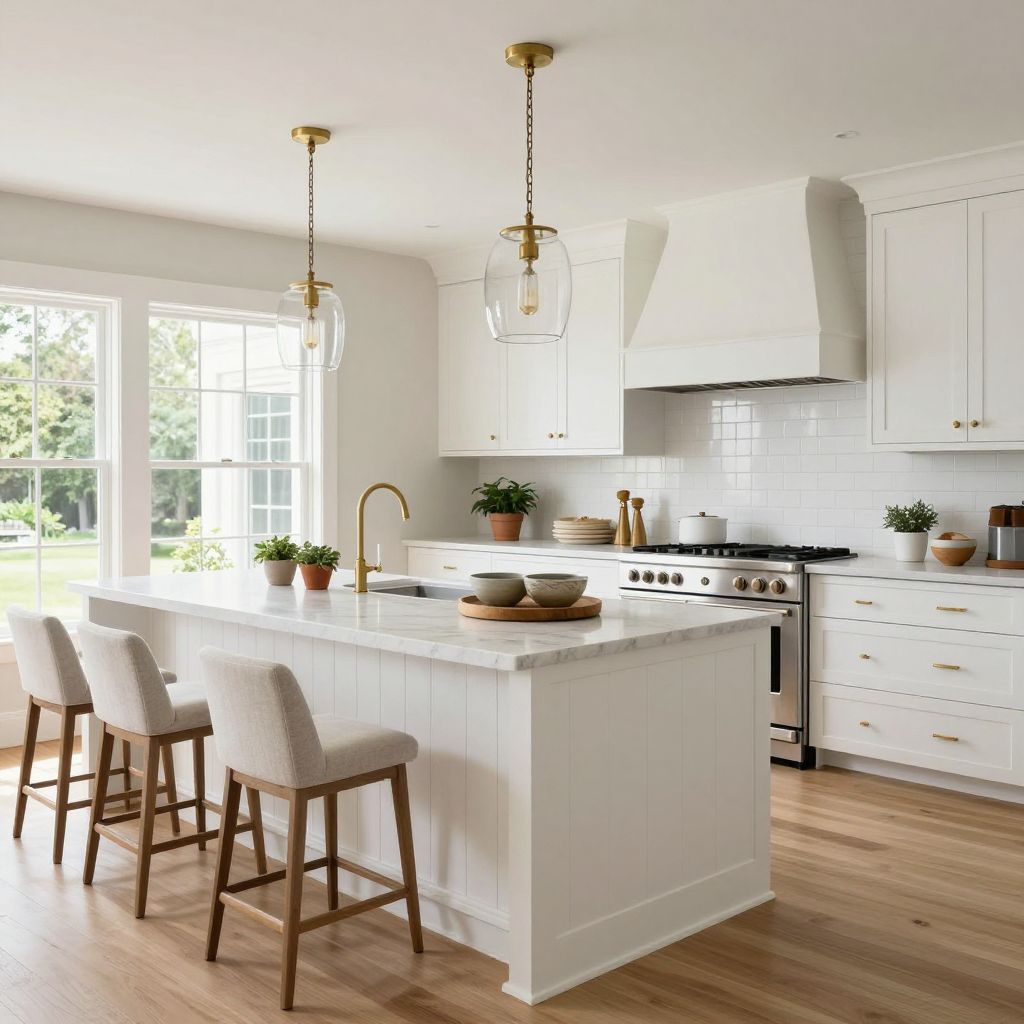
A shiplap back panel brings instant charm to a kitchen island, especially when the rest of the room feels clean and simple. I like it most on a large island with a wide overhang, since the horizontal lines help stretch the look of the room. Paint it crisp white for a bright farmhouse feel, or go with soft greige for something a little quieter.
- Layout type: large island, open concept kitchen
- Cabinet style: shaker or inset
- Countertop material: quartz or marble look quartz
- Lighting choices: glass pendants or simple lanterns
- Storage features: deep drawers, hidden trash pullout
- Optional variations: painted sage, soft blue, warm white
Pair the panel with shaker cabinets, quartz countertops, a white subway backsplash, and light oak flooring for a look that feels relaxed but pulled together. Brass or matte black hardware works well here, and pendant lights with glass shades keep the space airy. This look fits family kitchens, open plan homes, and renovation projects that need charm without fuss. This panel needs regular dusting, but paint and wood trim keep upkeep easy. I think it works best in homes that already lean traditional or farmhouse, though a cleaner version can fit modern spaces too. If you want extra value during a remodel, this detail adds character without wrecking your budget.
2. Vertical Slat Wood Panel
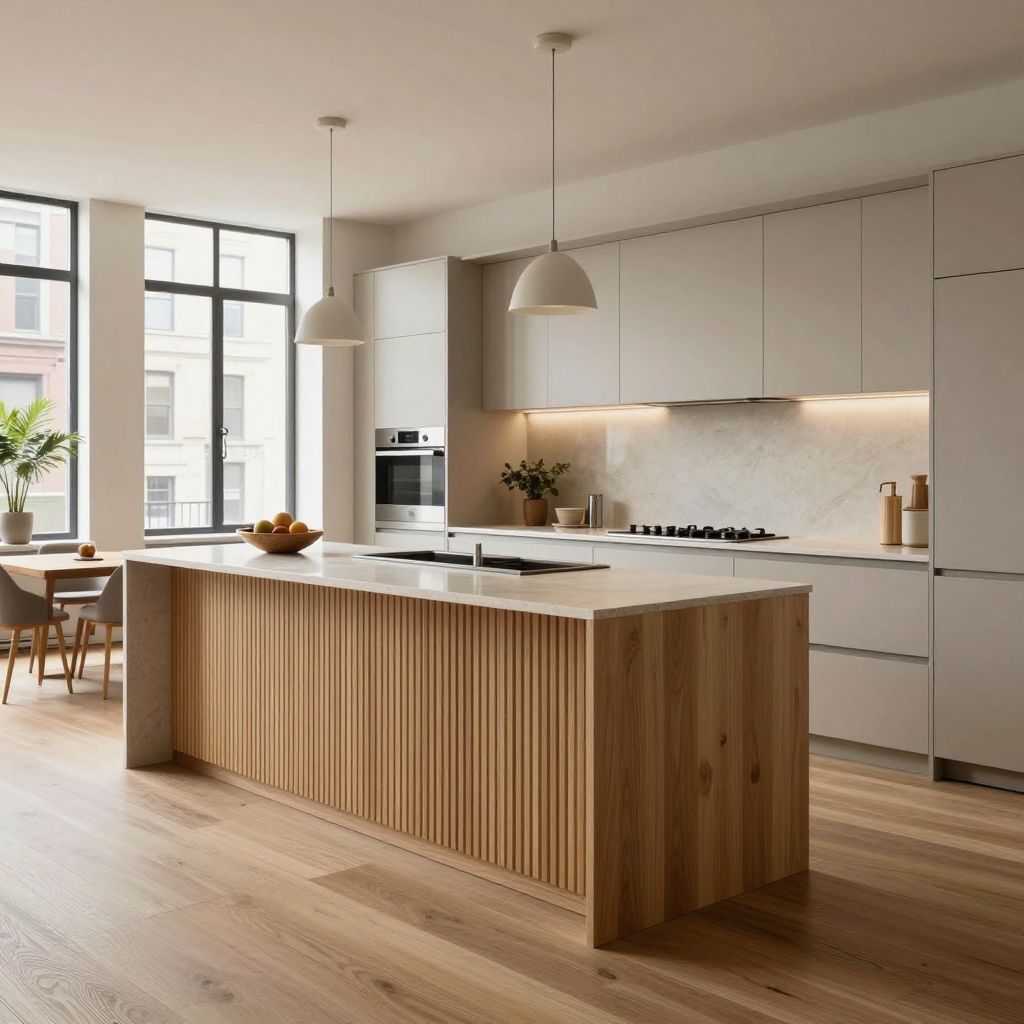
Vertical slats create a sleek, textural back panel that feels current without turning cold. I like this look on a simple island with flat front cabinetry, since the slim lines bring movement to an otherwise plain surface. Natural oak gives warmth, walnut deepens the mood, and painted finishes make the whole thing feel custom.
- Layout type: narrow island, compact open plan
- Cabinet style: flat panel
- Countertop material: quartz, honed stone, or solid surface
- Lighting choices: minimal pendant lights
- Storage features: hidden drawers, tray storage
- Optional variations: walnut stain, white oak, painted black
Try it with a stone countertop, slab backsplash, wide plank flooring, and understated hardware in brushed nickel or black. Use slim pendant lights and built in appliances to keep the island looking clean. This setup works well in apartments, compact kitchens, and modern homes that need a little visual interest. Wood slats need a finish that handles kitchen moisture, so I would skip anything too raw. This option sits in a mid range budget and gives a custom feel without a full furniture build. If you want a clean profile that still looks special, this one checks the box.
3. Beadboard Back Panel
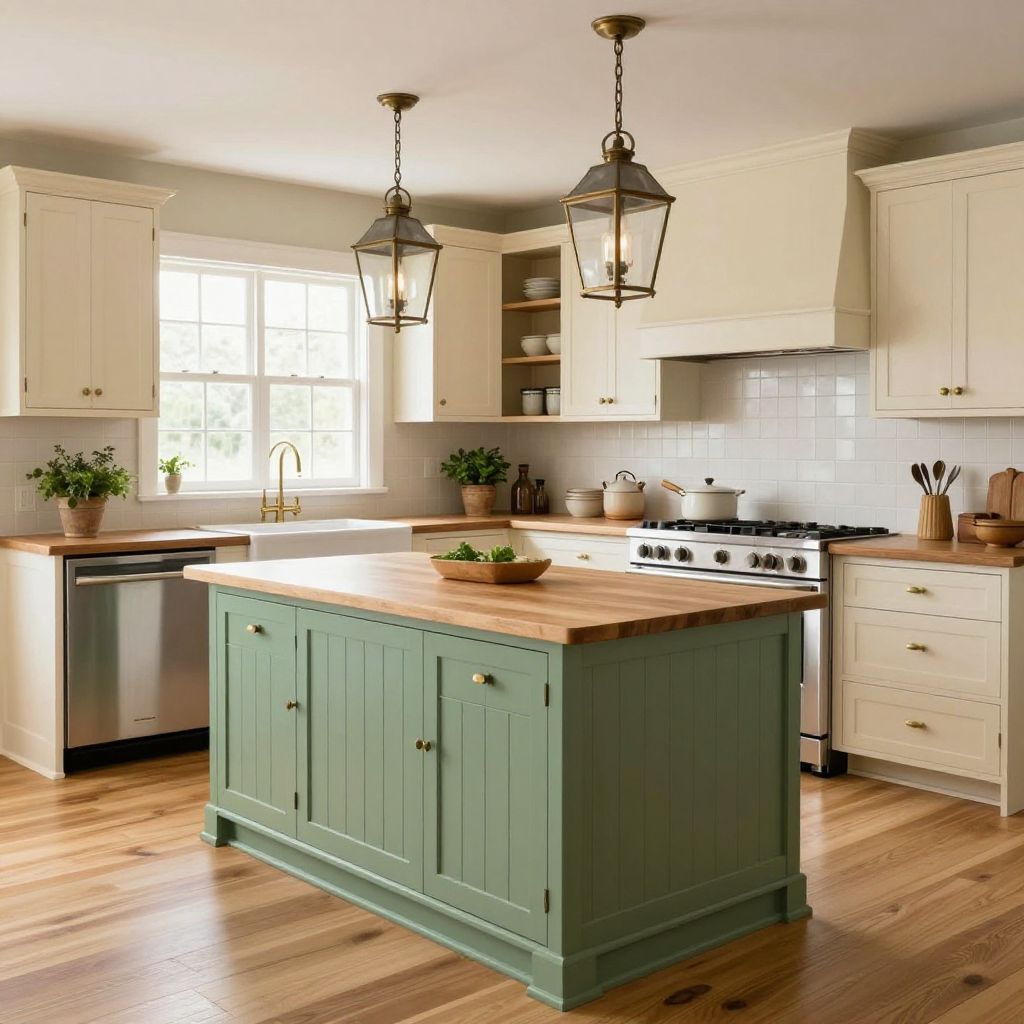
Beadboard gives a kitchen island a classic, slightly nostalgic feel that never seems to go out of style. I like it on painted islands with simple framing, since the panel detail adds charm without stealing the show. Soft cream, pale blue, or muted green can make the island feel collected and welcoming.
- Layout type: center island, galley kitchen with island
- Cabinet style: framed or shaker
- Countertop material: butcher block or quartz
- Lighting choices: lantern pendants, warm task lighting
- Storage features: enclosed shelving, deep drawers
- Optional variations: tongue and groove detail, beadboard paint in sage
Match it with butcher block or quartz countertops, a classic tile backsplash, and warm wood flooring for a comfortable, family friendly mix. Add polished nickel hardware and a pair of vintage style pendants for a gentle traditional look. This idea works well in cottages, older homes, and kitchens that need a softer focal point. Beadboard holds up well if you seal and paint it properly, so the upkeep stays reasonable. I would use it in homes that want charm more than sleek drama. If you love a lived in feel, this one delivers without trying too hard.
4. Fluted Wood Panel
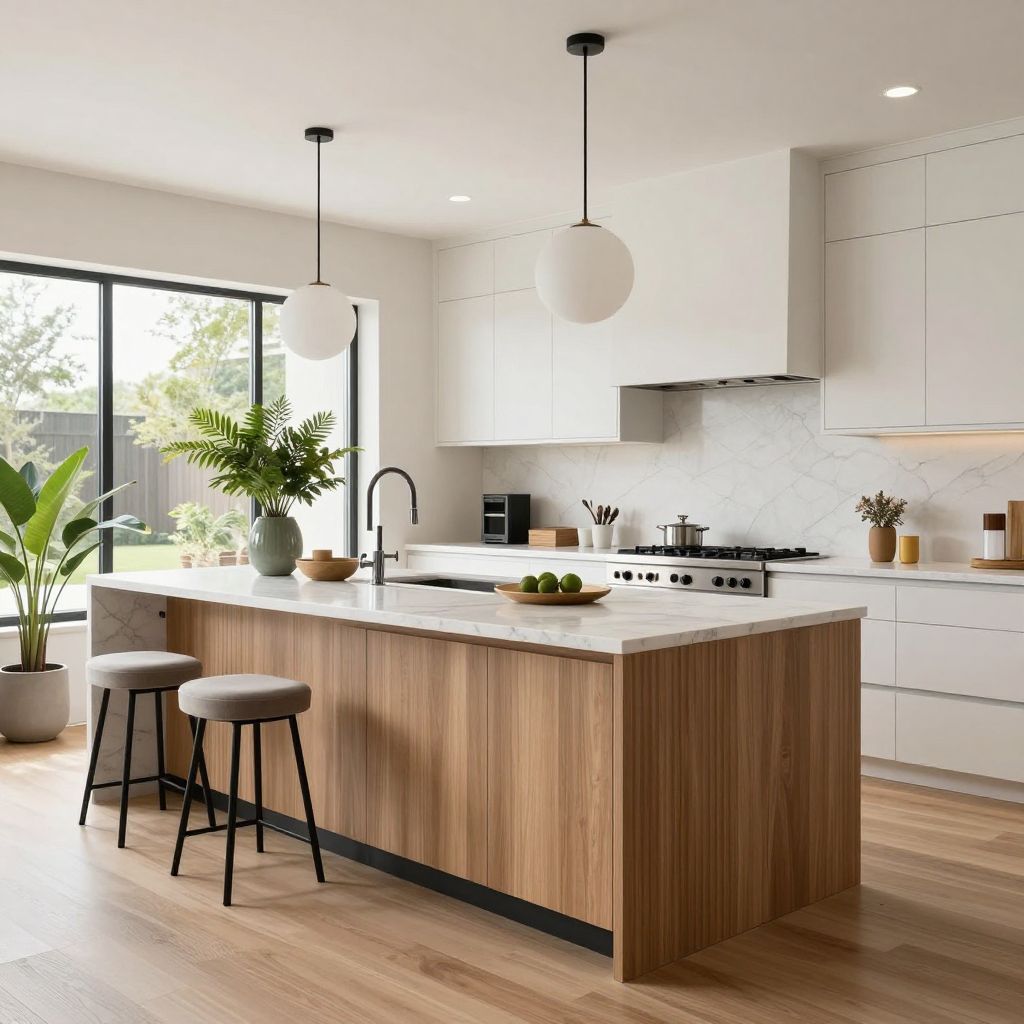
A fluted wood brings a sculpted look that feels polished and fresh. The vertical grooves add depth, so the island looks custom even when the rest of the kitchen stays simple. I love this paired with a straight lined island, since the texture becomes the star.
- Layout type: statement island, open concept kitchen
- Cabinet style: slab or handle free
- Countertop material: quartz or marble
- Lighting choices: sculptural pendants, recessed ceiling lights
- Storage features: hidden drawers, integrated charging nook
- Optional variations: ribbed lacquer, stained oak, warm taupe paint
Use a pale oak or dark walnut finish, then add a stone countertop, smooth backsplash, and clean lined flooring to keep the whole room balanced. Matte black hardware, concealed appliances, and soft globe pendants give the kitchen a refined mood. This works well in modern homes, luxury remodels, and open plan spaces where the island needs presence. Fluted panels do need careful cleaning since grooves collect dust, so that matters if you cook a lot. I think the look fits best in homes that want a high end feel without going full formal. It may cost more than beadboard, but it earns its keep in style points.
5. Natural Stone Slab Panel
A full stone slab back panel makes the island feel luxe and grounded at the same time. I like this look when the countertop and back panel share the same stone, since the wraparound effect feels strong and calm. Marble, quartzite, or dolomite all bring a different personality, from soft veining to bolder movement.
- Layout type: large central island
- Cabinet style: slab or minimal shaker
- Countertop material: marble, quartzite, dolomite
- Lighting choices: linear pendants, recessed spots
- Storage features: full height end panels, hidden cabinets
- Optional variations: bookmatched slab, honed finish, waterfall edge
Keep the rest of the kitchen simple with flat cabinets, slim hardware, a quiet backsplash, and wide plank flooring. Add discreet under island lighting and sleek appliances so the stone stays in focus. This idea works beautifully in large kitchens, entertaining spaces, and homes that want a dramatic central feature. Stone panels cost more, and the slab weight needs proper support, so this one suits a serious remodel. I would choose it for homes that already use stone elsewhere in the kitchen. If you want a timeless look with a high end feel, this one makes a strong case.
6. Painted Panel with Trim
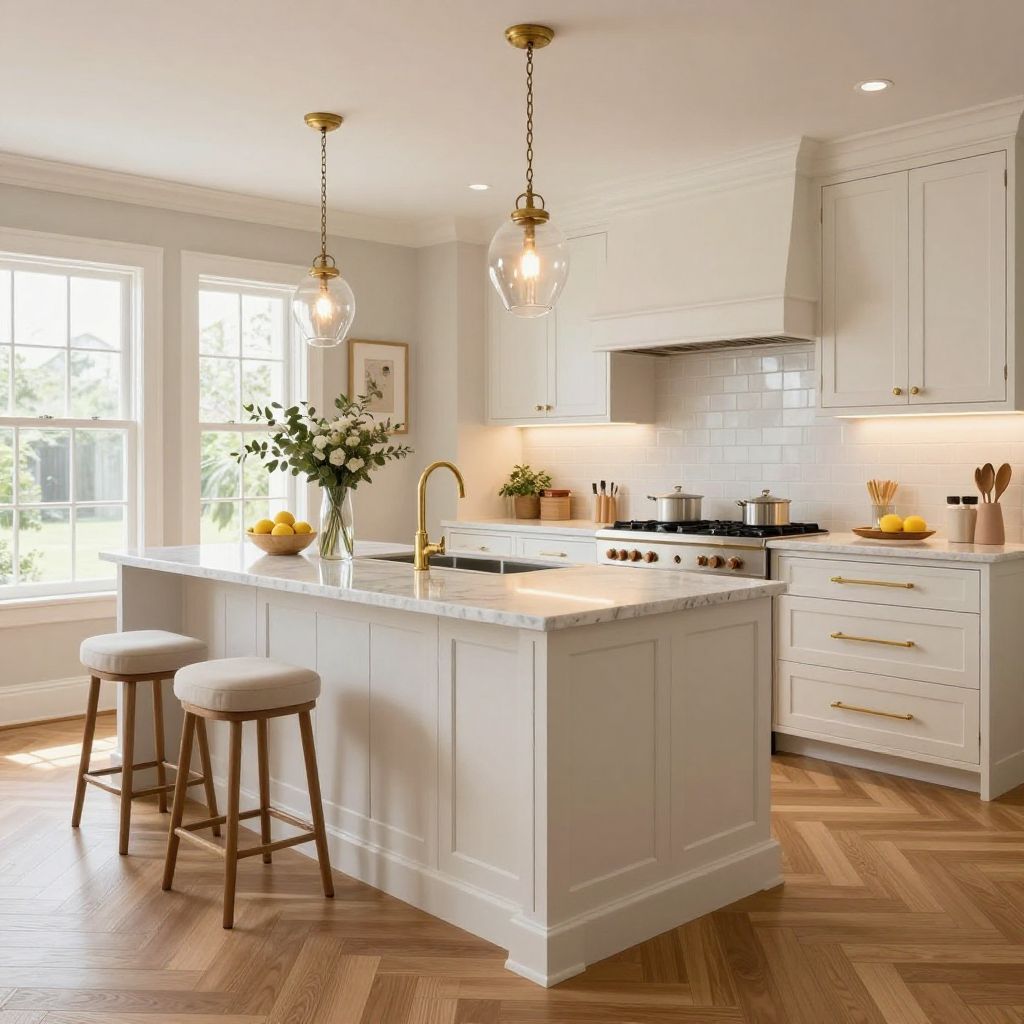
A painted back panel with trim detail gives you a custom furniture look without overcomplicating the island. The trim can frame the panel in a subtle way, which adds depth and makes plain cabinetry look way more interesting. I like deep navy, olive, or charcoal for a richer look, though soft white still feels elegant.
- Layout type: rectangular island, center work zone
- Cabinet style: framed panels, inset front
- Countertop material: quartz or granite
- Lighting choices: classic pendants, warm LED strips
- Storage features: drawers, hidden bins, cutlery inserts
- Optional variations: painted trim in contrasting color
Pair it with quartz countertops, simple tile backsplash, warm wood or herringbone flooring, and classic brass pulls. Glass pendants and pendant shades with fabric or frosted finishes soften the whole setup. This style works in traditional kitchens, transitional remodels, and homes that want a tailored feel without going formal. Painted trim gives you a budget friendly upgrade if you want more detail without replacing the island. I would use durable cabinet paint and satin finish for easier cleaning. This approach fits older homes and newer builds that need a little soul.
7. Open Shelf Back Panel
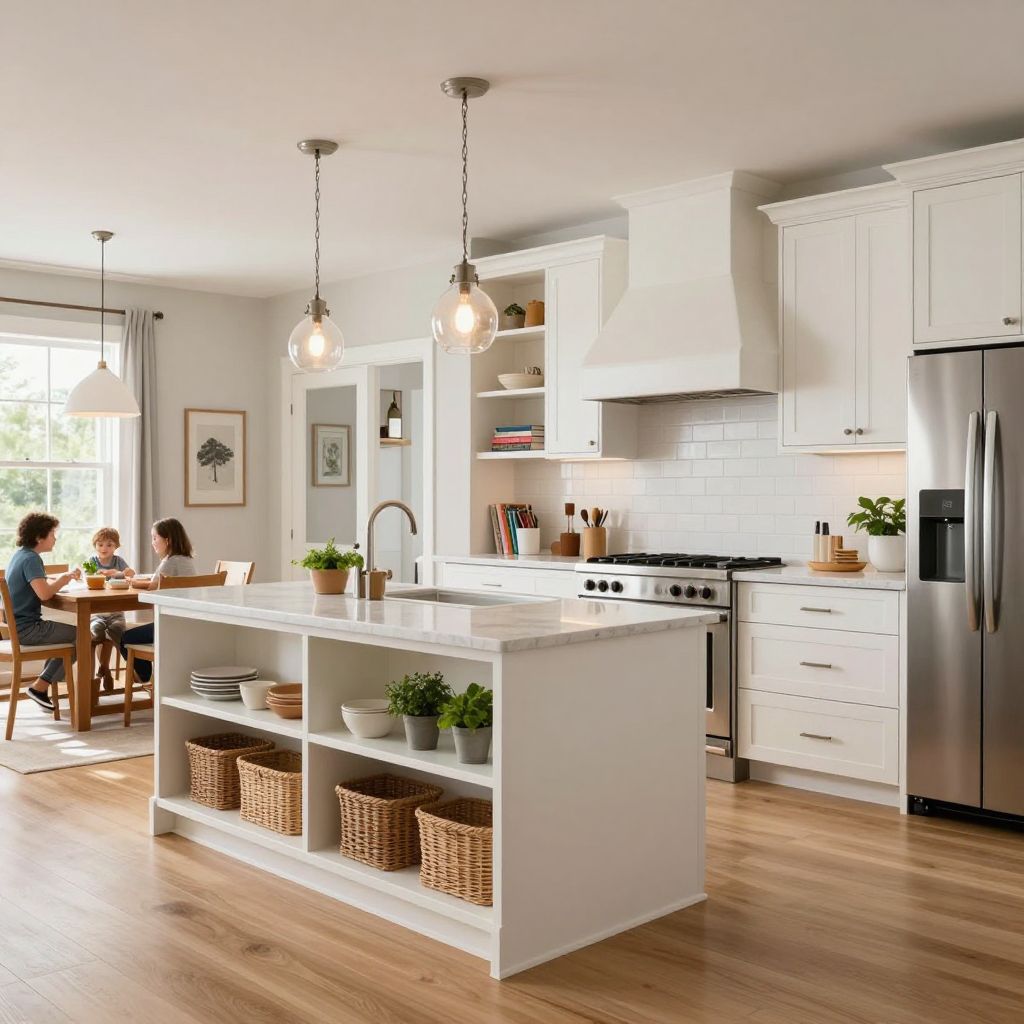
If you want the island to do double duty, an open shelf back panel can give you usable storage and a stylish display zone. The shelves work well for cookbooks, bowls, serving pieces, or baskets that hide the small stuff nobody wants to stare at all day. I like this best on islands that face a family room or breakfast area, since the shelving adds a softer, more lived in look.
- Layout type: island facing living space
- Cabinet style: mixed closed storage with open shelves
- Countertop material: quartz, butcher block, or granite
- Lighting choices: pendants with clear glass or linen shades
- Storage features: display shelves, baskets, book storage
- Optional variations: two shelf units, single long shelf
Use a durable wood or painted finish, then balance it with stone counters, simple backsplash tile, and sturdy flooring that can handle traffic. Brass or black hardware keeps the look clean, and pendant lights help define the island zone. This design feels relaxed, practical, and a little more personal than closed cabinetry. Open shelves need regular tidying, so they suit people who like keeping things neat. I would use this in kitchens with strong storage elsewhere, then let the island feel lighter. If you want function and display in one spot, this option does both nicely.
8. Mirror Panel Back
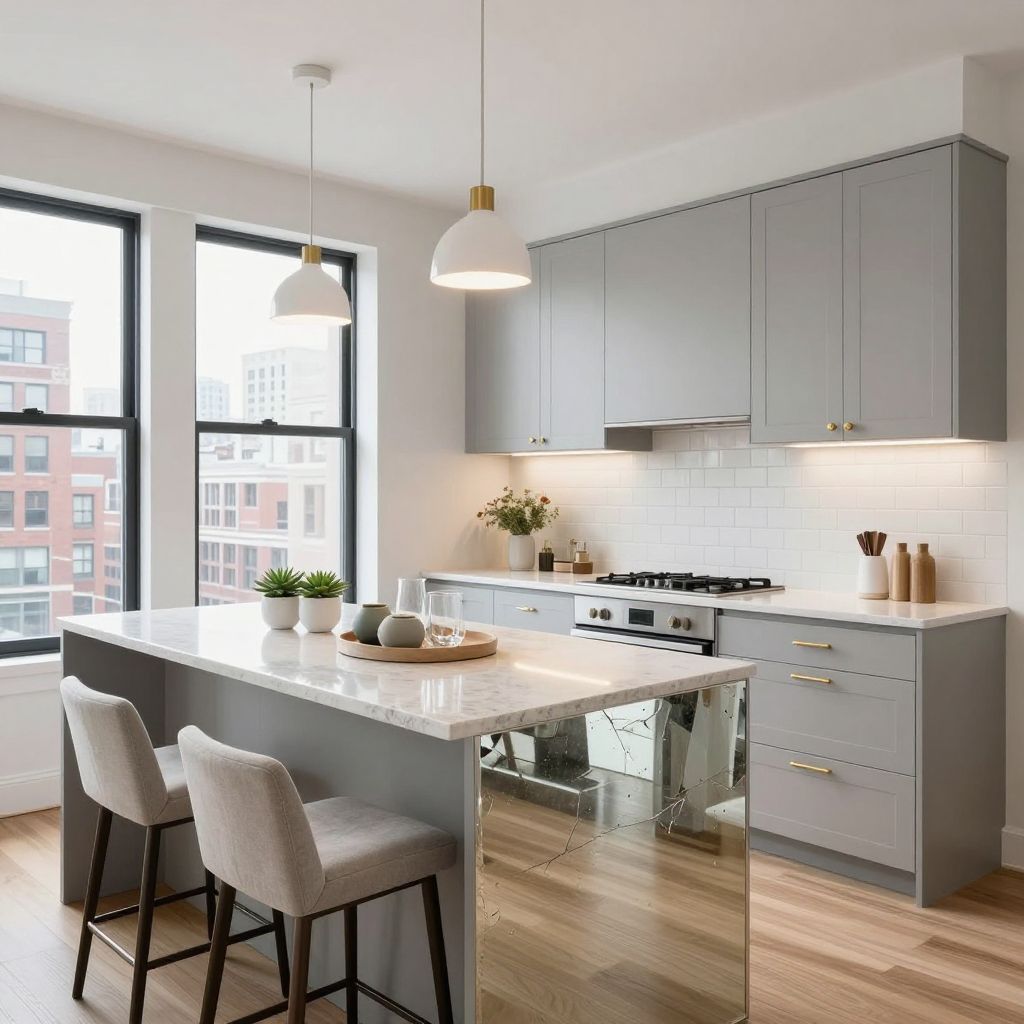
A mirror panel on the back of a kitchen island can make a tight room feel brighter and bigger. It reflects light from windows and pendants, which helps in smaller kitchens that need a visual lift. I prefer antiqued mirror for a softer look, since full shine can feel a little too glam for everyday cooking.
- Layout type: compact island, apartment kitchen
- Cabinet style: slim shaker or slab
- Countertop material: quartz or marble look quartz
- Lighting choices: bright pendants, under cabinet glow
- Storage features: hidden cabinetry, shallow drawers
- Optional variations: antiqued mirror, smoked mirror, framed mirror panel
Match the mirror with slim cabinetry, stone counters, a simple backsplash, and light toned flooring for a clean finish. Use brushed brass or polished nickel hardware and keep appliances streamlined so the reflection stays balanced. This idea works well in apartments, narrow kitchens, and compact layouts that need more depth. Mirror needs more cleaning than wood or paint, so fingerprints will show up fast. I think it works best in controlled doses, not on every surface in sight. Use it in smaller kitchens where you want more light without changing the layout.
9. Slab Wood Veneer Panel
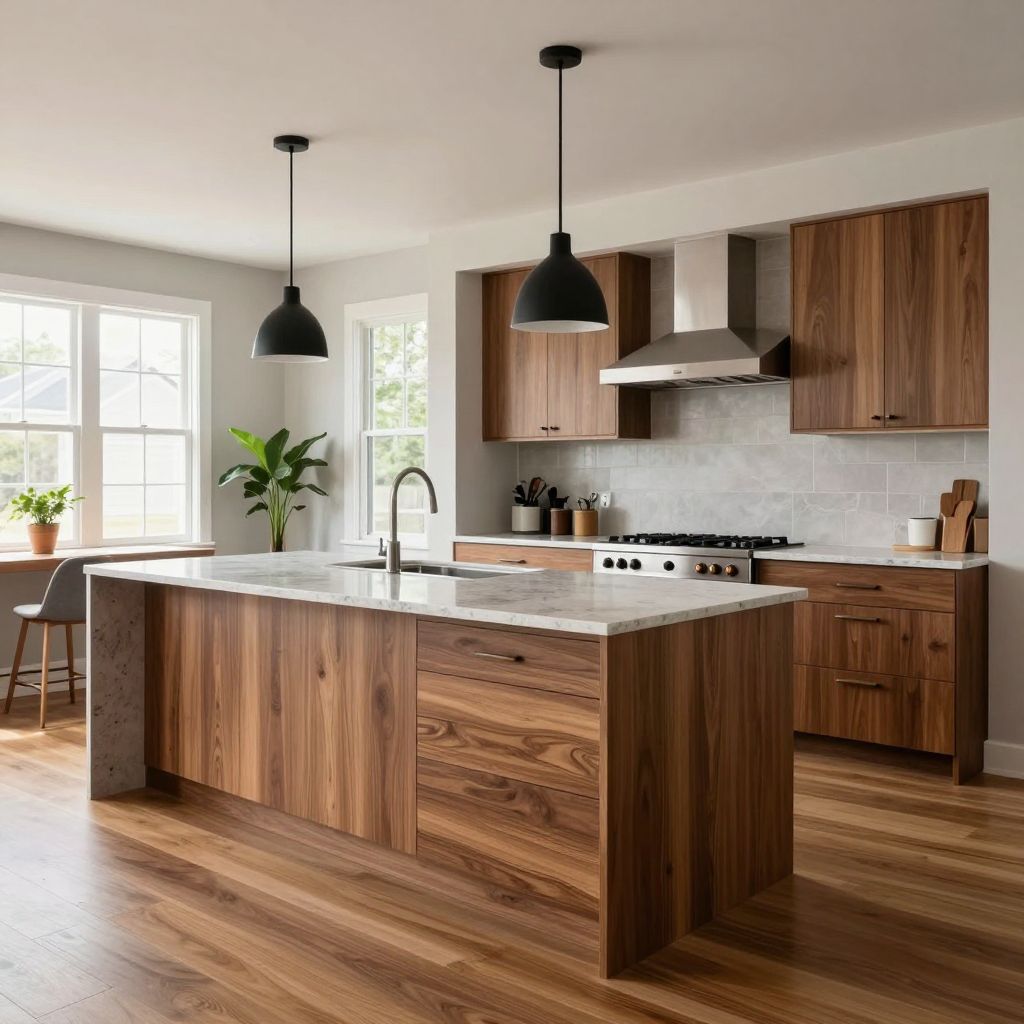
A wood veneer slab back panel gives the island a smooth, refined finish with visible grain. I like this for mid century inspired kitchens since the surface feels clean but still warm. Walnut sets a richer tone, and white oak keeps the room light and relaxed.
- Layout type: open island, central prep zone
- Cabinet style: flat front, handle less or thin pulls
- Countertop material: quartz or solid surface
- Lighting choices: streamlined pendants
- Storage features: concealed drawers, appliance garage
- Optional variations: walnut veneer, oak veneer, matte seal
Combine it with a simple quartz countertop, understated backsplash tile, flat front cabinets, and low profile hardware. Add pendant lighting in bronze or matte black, then keep appliances built in for a tidy look. This style suits open concept homes, modern family kitchens, and renovation projects that need warmth without clutter. Veneer works best with a solid finish and careful installation, so hire someone experienced if you want crisp edges. I like it for homes that need warmth without heavy ornament. It gives you style without making the island feel bulky.
10. Tile Clad Back Panel
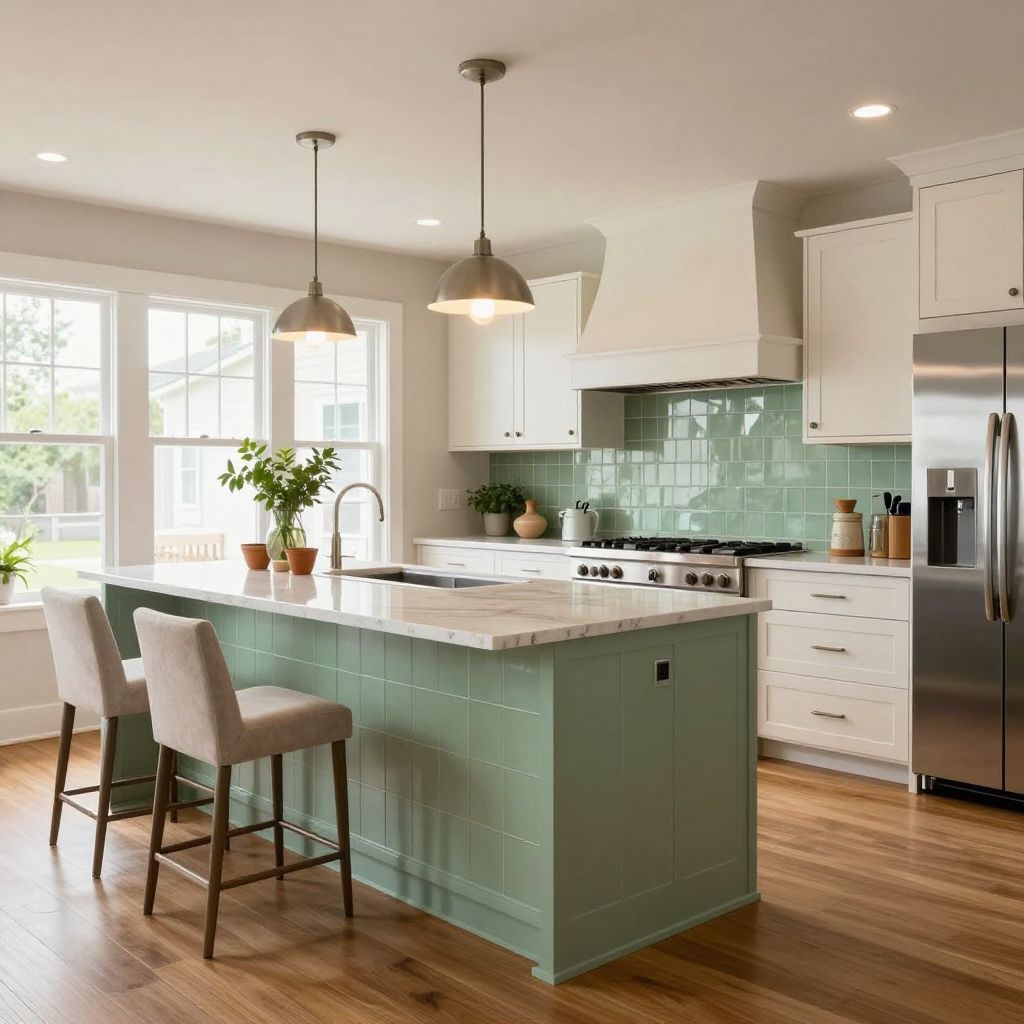
Tile on the island back panel brings color, pattern, and a bit of texture to the center of the room. I usually suggest a large format tile or zellige look tile if you want movement without too much visual noise. A soft green, creamy white, or muted blue can make the island feel fresh and inviting.
- Layout type: statement island, open kitchen
- Cabinet style: shaker or slab
- Countertop material: quartz, soapstone, or butcher block
- Lighting choices: pendants with warm bulbs
- Storage features: drawers, hidden outlets, shelf space
- Optional variations: handmade tile, glossy finish, matte finish
Pair the tile with simple cabinetry, a quartz or soapstone countertop, hardwood flooring, and sleek hardware. Use task lighting under the overhang or near seating to keep the panel visible and well lit. This idea works well in kitchens that need a strong focal point or a touch of personality. Tile needs grout care, so pick a tone that hides everyday wear. I think this look works best when the island already serves as the room’s focal point. If you want a more decorative finish than paint, tile gives you that extra personality.
11. High Contrast Painted Panel
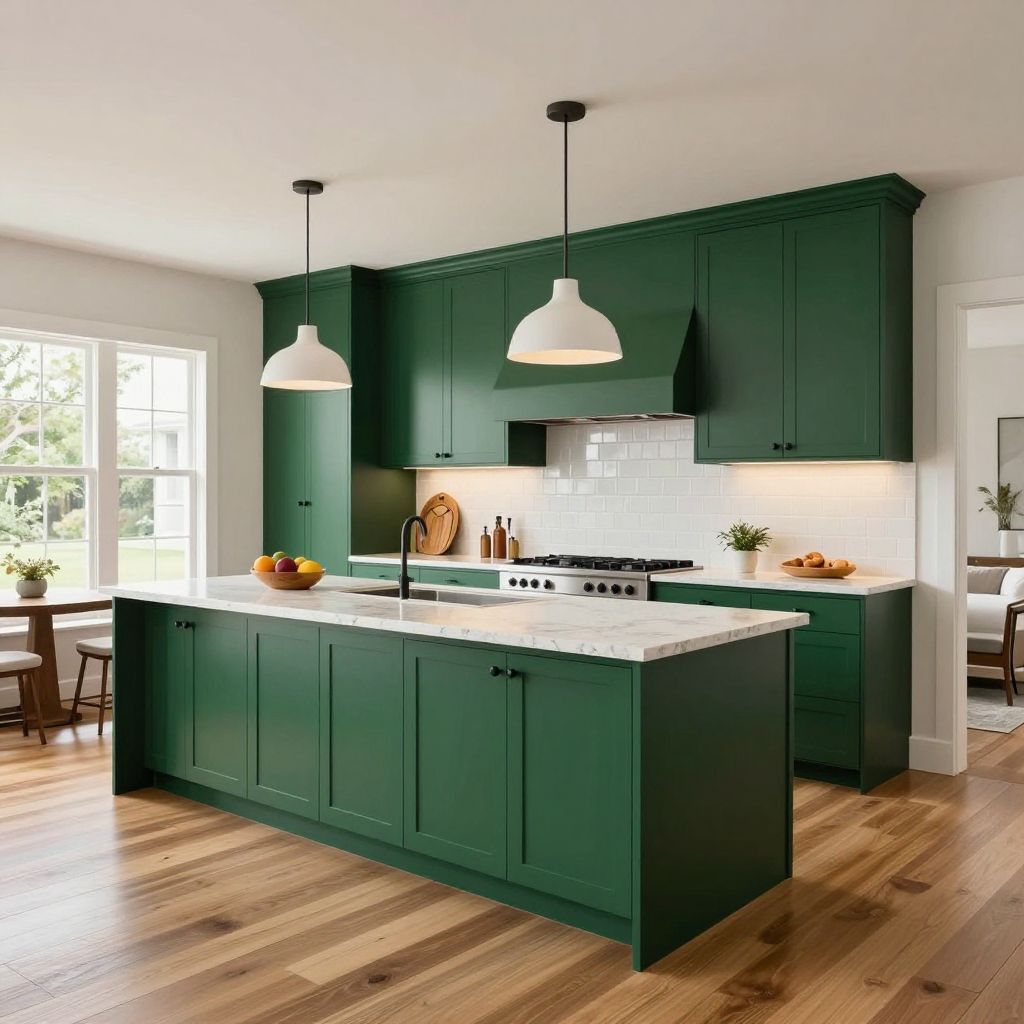
A high contrast back panel can turn the island into a bold anchor piece. I like a black panel in a white kitchen or a deep green panel in a pale room, since the contrast creates real drama without stretching the budget too far. Keep the lines clean so the color gets room to breathe.
- Layout type: central island, open concept space
- Cabinet style: flat front or slim shaker
- Countertop material: quartz or stone
- Lighting choices: sculptural pendants, recessed lights
- Storage features: deep drawers, utensil organizers
- Optional variations: black, forest green, deep navy
Use quartz counters, a simple tile backsplash, oak or hickory flooring, and sleek hardware in matte black or brushed brass. Add statement pendants and built in storage for a balanced finish. This style works in modern homes, mixed material kitchens, and renovation spaces that need a stronger focal point. This is an easy way to add impact without changing the whole room. I would choose durable paint with a smooth finish so upkeep stays simple. If your kitchen needs attitude, this one gets it done.
12. Woven Texture Panel
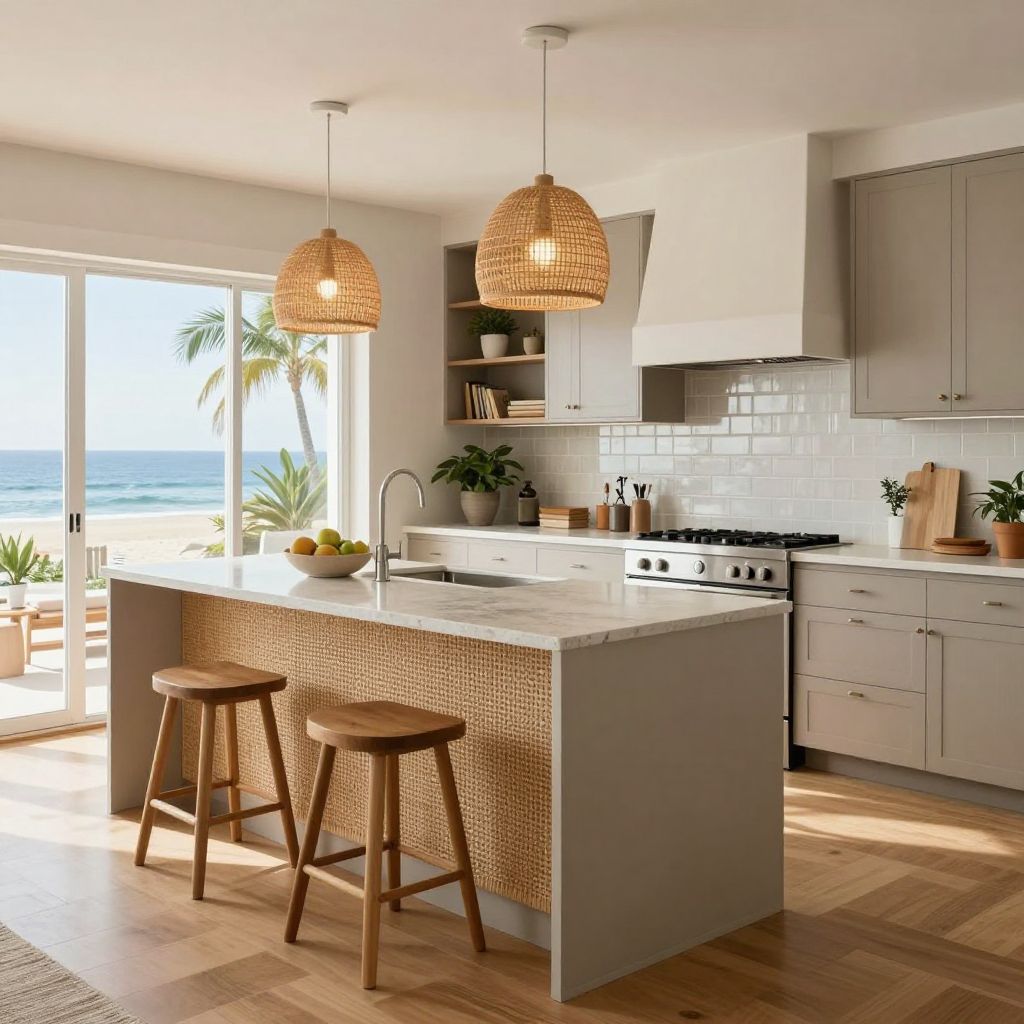
A woven texture back panel adds warmth and a hint of natural texture to the island. I like rattan look panels or cane inspired inserts for kitchens that need softness without feeling rustic. The texture keeps the island interesting and helps break up all the hard surfaces in the room.
- Layout type: island with casual seating side
- Cabinet style: painted shaker or bead detail
- Countertop material: quartz or honed stone
- Lighting choices: woven pendants, soft diffused light
- Storage features: basket storage, hidden drawers
- Optional variations: cane inserts, textured resin panel
Pair it with light stone counters, painted cabinets, subtle backsplash tile, and warm wood flooring. Brass hardware and soft white pendant shades complete the look nicely. This idea suits coastal homes, casual family kitchens, and spaces that lean airy and relaxed. Natural texture needs care in busy kitchens, so I would keep it away from heavy splash zones. It works best in homes that want a laid back feel and a lighter visual footprint. If your kitchen needs a softer finish, this one does the trick.
13. Built In Wine Storage Panel
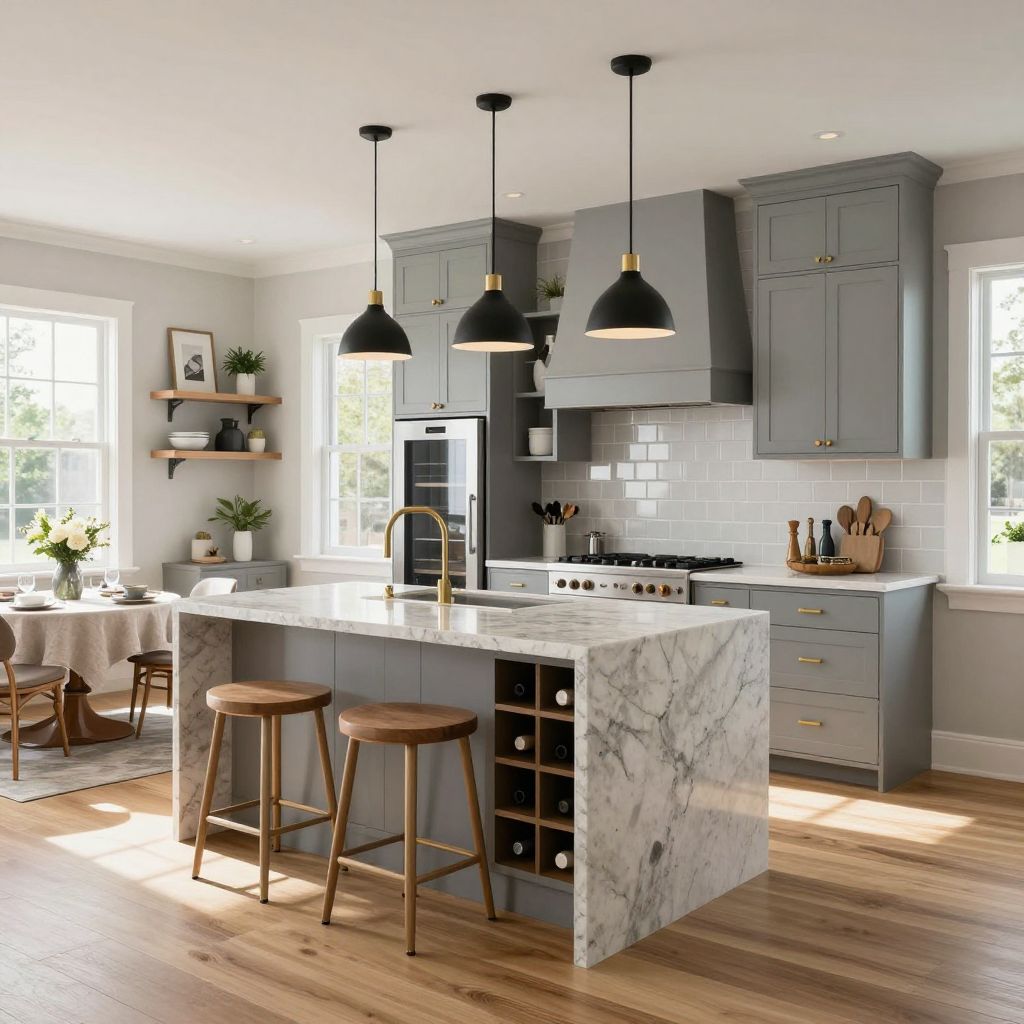
A back panel that includes wine storage turns the island into a social hub. I like wine cubbies, stemware storage, or a slim beverage fridge built into the back face, since the island then works for cooking and hosting. The design feels smart and practical without looking like a utility box in the middle of the room.
- Layout type: gathering island, open entertaining space
- Cabinet style: slab or inset
- Countertop material: quartzite, quartz, or marble
- Lighting choices: pendant trio, low profile task lights
- Storage features: wine cubbies, bottle racks, beverage fridge
- Optional variations: open shelf bar zone, closed cabinet version
Use a stone or quartz waterfall countertop, smooth cabinetry, metal hardware, and a backsplash that stays simple so the storage area stands out. Matte black accents or warm bronze details help the whole setup feel finished. This option works especially well in entertaining kitchens, open plan homes, and larger family spaces. This setup needs clear planning so the storage stays easy to reach and does not crowd the seating side. I think it works best in homes that host often. If you like a kitchen that pulls double duty, this option earns its spot.
14. Raised Furniture Style Panel
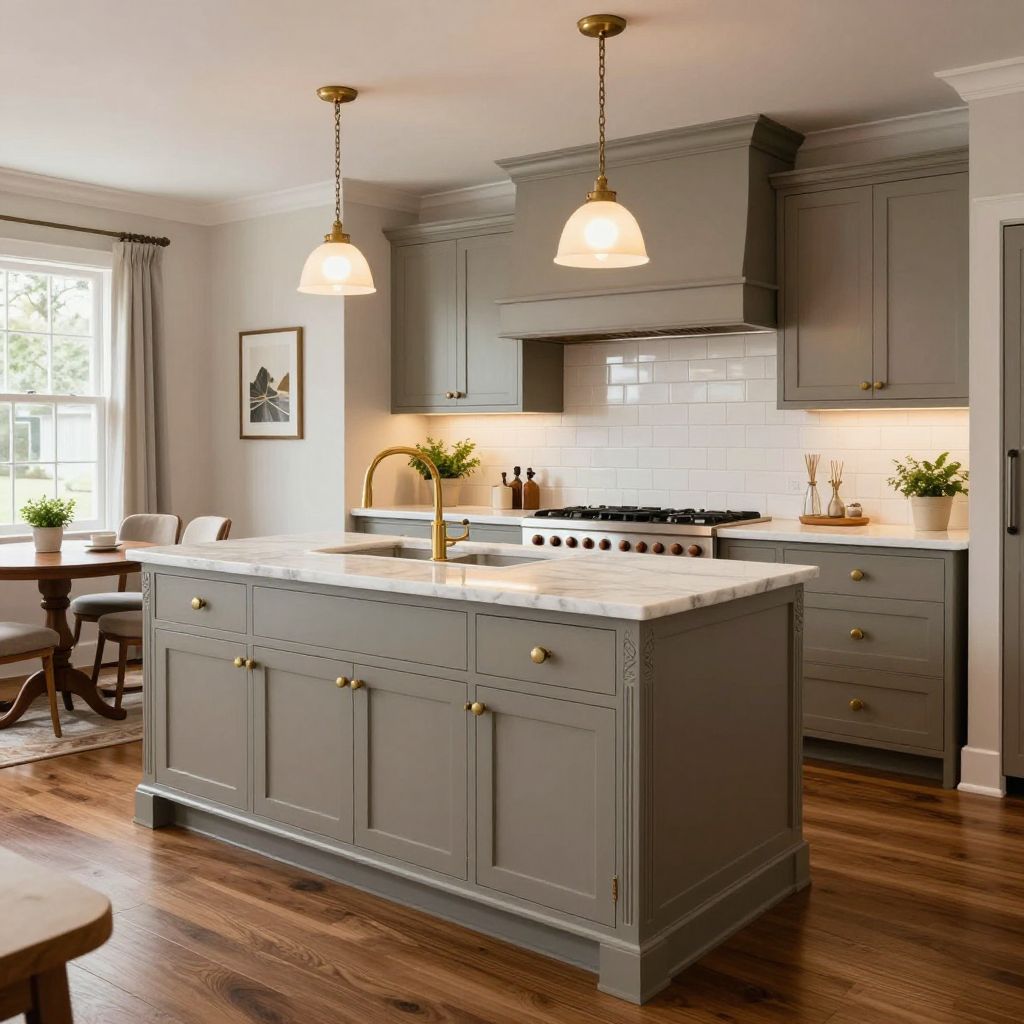
A furniture style back panel makes the island look like a custom piece instead of a built in block. I love this approach for kitchens that want a softer, more collected feel, since the legs, trim, or inset detailing give the island personality. Paint it in a muted color or keep it natural wood for a warm finish.
- Layout type: freestanding look island
- Cabinet style: furniture inspired, inset front
- Countertop material: marble, quartz, or soapstone
- Lighting choices: petite pendants, layered ambient light
- Storage features: drawers, open toe kick detail, side cabinets
- Optional variations: stained wood, painted finish, carved trim
Pair it with stone countertops, classic backsplash tile, and hardwood flooring for a comfortable, timeless mix. Add antique brass or polished nickel hardware and small pendant lights to echo the furniture feel. This design fits traditional homes, cottage inspired kitchens, and remodels that want charm with polish. This style can raise labor costs a bit, so I would save it for a main kitchen remodel. It suits homes that love details and classic proportions. If you want your island to feel like a piece of furniture, this idea gets there fast.
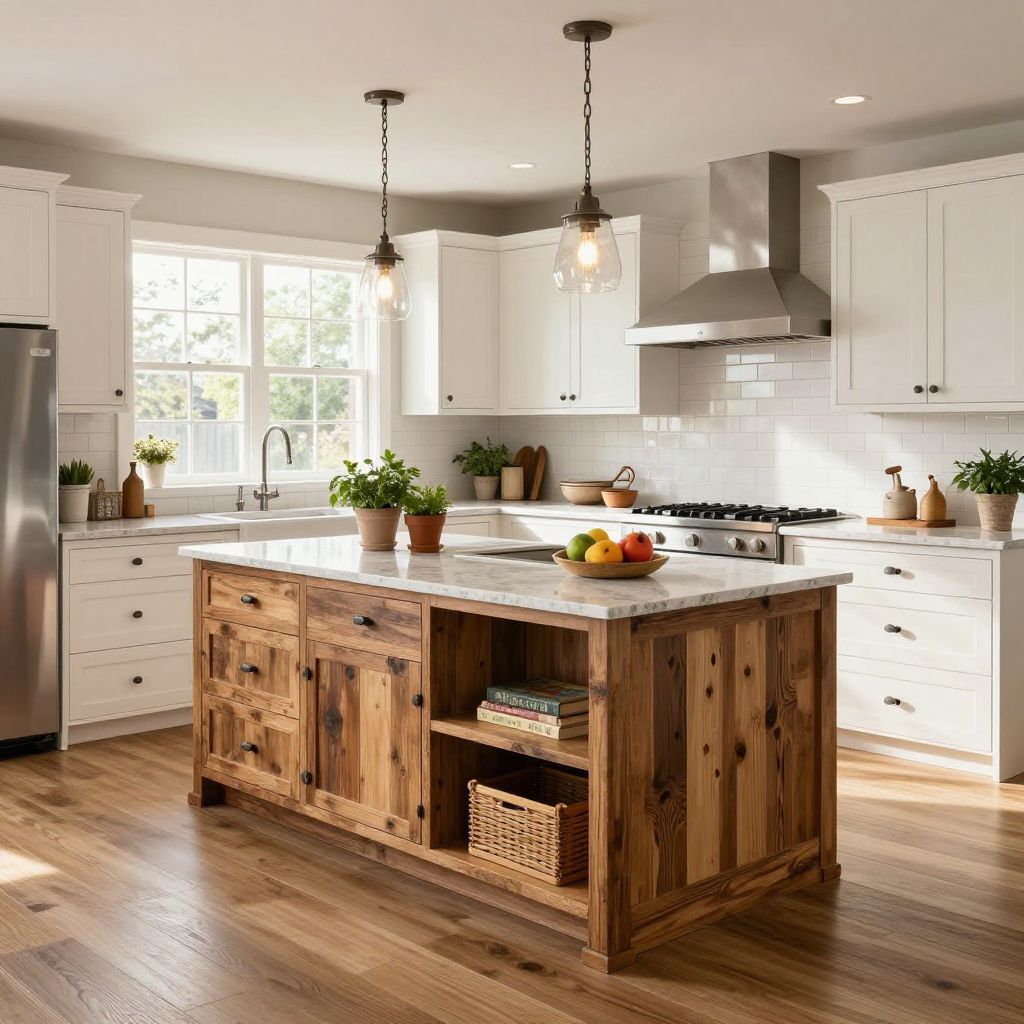
15. Reclaimed Wood Panel
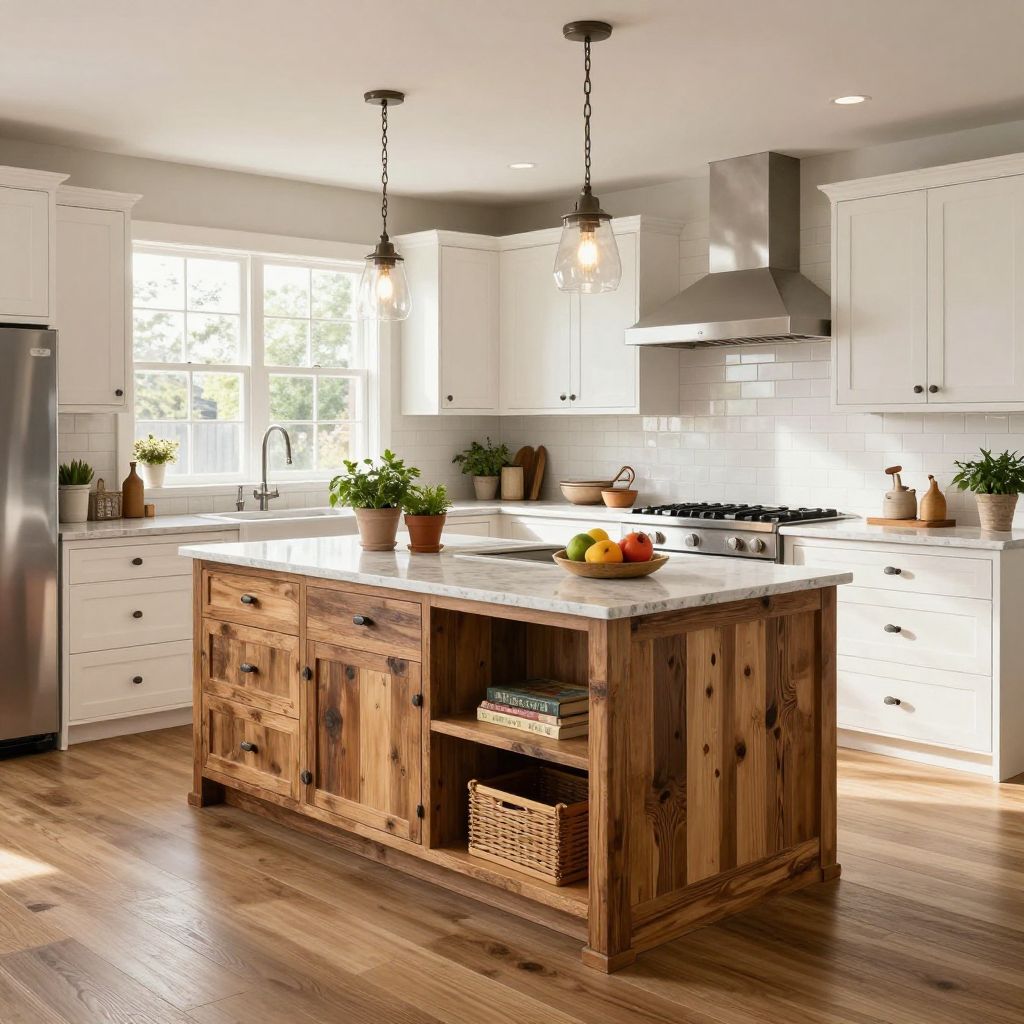
Reclaimed wood brings instant texture, history, and warmth to a kitchen island. I like the rough grain and natural variation because it stops the island from feeling too polished or too perfect, which sounds refreshing in a room full of shiny surfaces. Pair lighter wood with white cabinets for softer contrast, or use darker wood for a richer, rustic mood.
- Layout type: central island, family kitchen
- Cabinet style: simple shaker or slab
- Countertop material: quartz, soapstone, or butcher block
- Lighting choices: industrial pendants or clear glass shades
- Storage features: deep drawers, open shelving, hidden bins
- Optional variations: weathered finish, mixed wood tones, sealed barn wood
Combine the panel with stone or quartz counters, simple tile backsplash, matte hardware, and durable flooring that can handle daily traffic. Industrial style pendants or simple glass lights balance the texture nicely. This look works well in farmhouse kitchens, rustic homes, and eclectic spaces that want some soul. Reclaimed wood needs sealing, and I would not use a soft finish here if you cook often. It fits renovation projects that want character without relying on trendy finishes. If you want the island to feel warm and lived in, reclaimed wood does the job nicely.
Frequently Asked Questions
How do I choose the right kitchen island back panel idea for my space?
Start with the rest of your kitchen. If your cabinets and countertops already feel busy, pick a simple panel like painted trim or shiplap.
If the room feels plain, go for texture, color, or a stronger focal point like stone or fluted wood. The island should fit the room, not argue with it.
What materials work best for kitchen island back panels?
Painted wood, stone, tile, veneer, and wood slats all work well. I would pick based on how much traffic the island gets and how much cleaning you want to do.
Busy families usually do best with easy care finishes like painted panels or sealed stone. Decorative options need a little more upkeep, which feels fair enough.
Can I add storage in the back panel of my island?
Yes, and that is one of the smartest uses of the space. Open shelves, wine cubbies, and shallow drawers can all fit into the back face of an island.
I like storage there when the island faces a living room or breakfast area. It lets the kitchen work harder without feeling bulky.
What back panel ideas work best in small kitchens?
Light colors, mirrors, and slim vertical details help a small kitchen feel less boxed in. I would avoid heavy materials that make the island look too chunky.
Try a simple painted panel or a narrow slat design if you want style without visual weight. Small spaces need smart moves, not extra clutter pretending to be chic.
How do I keep a kitchen island back panel easy to maintain?
Pick finishes that match your daily habits. Painted wood, sealed tile, and durable stone usually hold up well with basic cleaning.
If you cook a lot, avoid porous finishes that stain easily. You want a panel that still looks good after real life happens, which it always does.
Do kitchen island back panel ideas work in rentals or low budget updates?
Yes, and that part makes them pretty useful. A painted panel, peel and stick style trim, or simple beadboard can change the whole look without a full remodel.
Even a small update can shift the room from plain to polished. That is a nice return for one surface, honestly.
Final Thoughts
The best kitchen island back panel ideas do more than fill space. They bring texture, storage, color, and a stronger sense of style to the center of the kitchen.
I always think the island should feel just as considered as the cabinets and countertops around it. When you treat that back panel like part of the design instead of an afterthought, the whole room feels more finished.
So pick the look that fits your space, your budget, and your daily routine. Go bold if the room needs personality, or keep it simple if you want the island to blend in and behave. Either way, your kitchen gets a lot more interesting.
If you want more home decor, kitchen design, and interior inspiration, take a look at small kitchen island ideas and kitchen peninsula ideas.